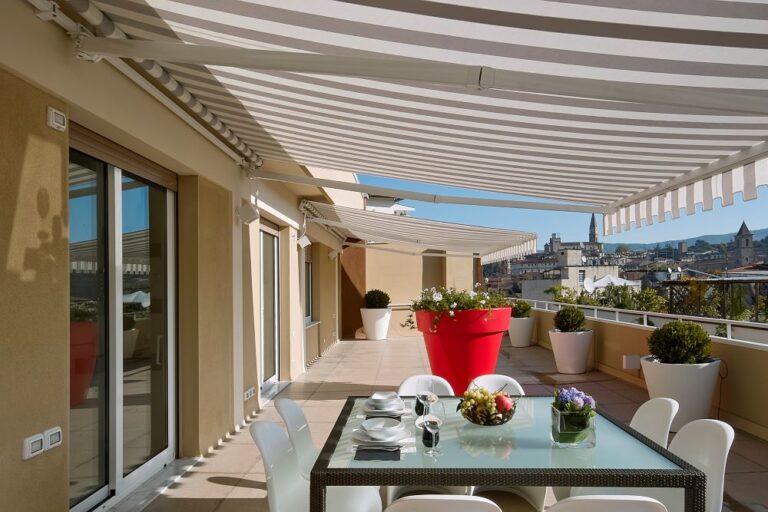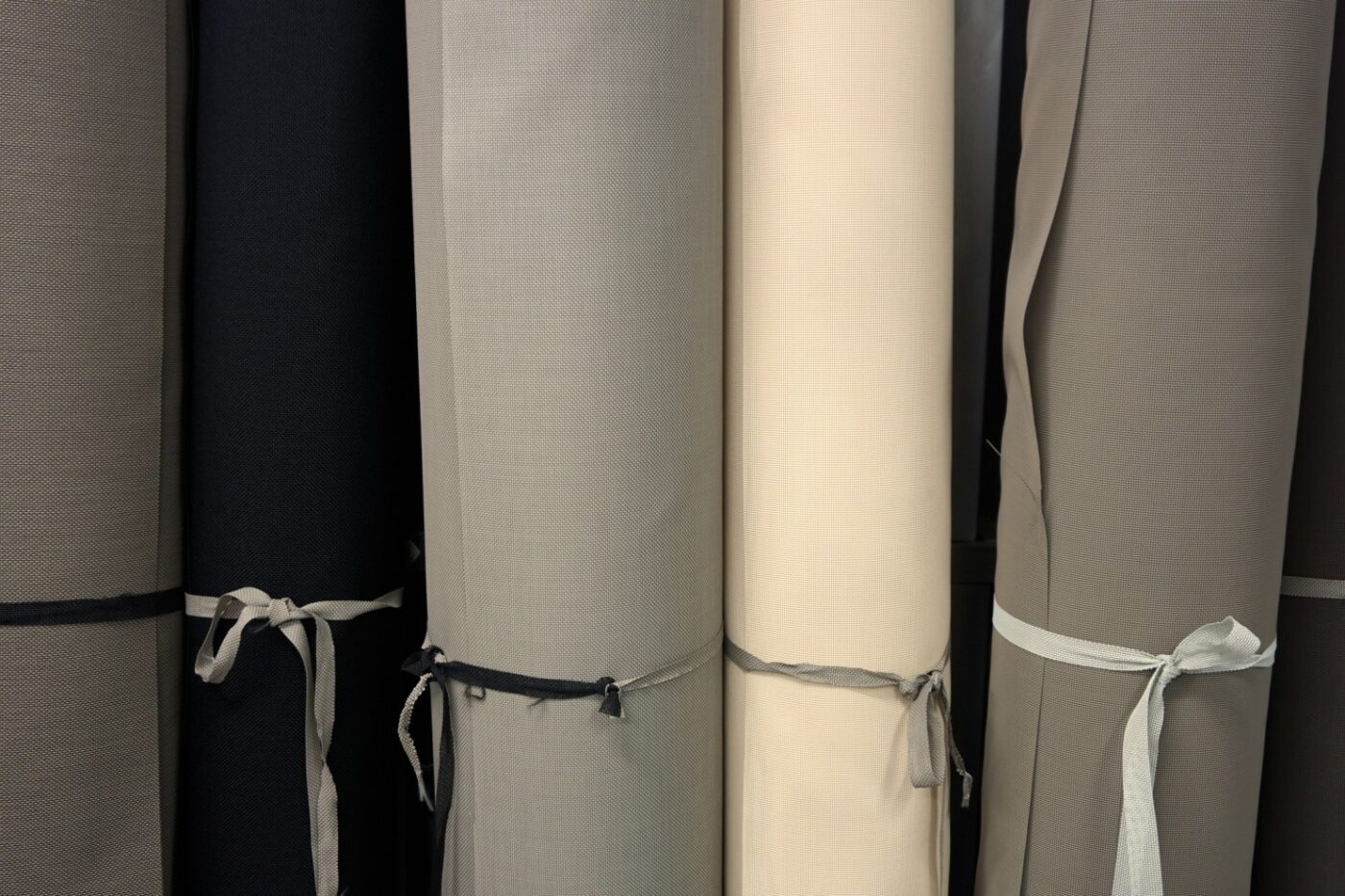
Two balconies in the same condo block can run identical hardware and still feel completely different at 4pm. The tracks match, the motors match, the aluminium matches. What separates them is the fabric. Choosing PVC fabric in Singapore is not a finishing decision made after the quote is signed. It is the single component that governs how much heat you block, how much of your view survives, and whether the screen still looks sharp after five years of monsoon rain and equatorial UV. At Alpha Shading, we build the frames to outlast the building. The fabric is what does the daily work.
What PVC Fabric Actually Is
PVC fabric is not plastic sheeting. It is a woven polyester base yarn coated in polyvinyl chloride, giving it the tensile strength of a textile with the weather resistance of a polymer. That construction is why it dominates tropical outdoor use. It does not absorb water, so it will not rot the way natural canvas does. It holds tension across a wide span without sagging. And it resists mould in 80% humidity, provided the coating stays intact.
One property matters above all others here: PVC fabric works as an external barrier. Fitted outside the glass on a zip track blinds system, it intercepts solar radiation before it enters the building envelope. An internal curtain can only absorb heat that has already arrived.
The Three Types of PVC Fabric Used in Outdoor Blinds Singapore Homes Rely On
Mesh PVC (the standard screen)
Microscopic gaps in the weave allow airflow while cutting glare and UV. This is the default across most zip blinds Singapore installations because it preserves cross ventilation. It is not waterproof, and no honest installer should claim otherwise.
Solid PVC (blockout)
A closed, non-permeable membrane. It stops rain, blocks the view entirely, and delivers total privacy. Suited to service yards, laundry corners and enclosed store areas rather than living balconies.
Clear PVC (crystal clear)
A transparent panel that sheds rain while keeping the view. The honest trade-offs: it yellows gradually under direct UV, scratches more easily, and offers no glare control at all.
| Fabric type | Rain | Airflow | View retained | Privacy (day) | Typical lifespan |
| Mesh PVC | Partial | High | Good | Good | 8 to 10 years |
| Solid PVC | Full | None | None | Total | 8 to 12 years |
| Clear PVC | Full | None | Excellent | None | 4 to 6 years |
Openness Factor: The Number That Decides Everything
Openness factor is the percentage of the mesh surface that is open space. It is the most important line on the datasheet and the one most buyers never hear about.
| Openness | Glare control | View out | Airflow | Best suited to |
| 1% to 3% | Excellent | Limited | Low | West-facing balconies, 3pm to 7pm sun |
| 5% | Good | Good | Moderate | Most condo balconies |
| 10% | Fair | Excellent | High | Sheltered, north or east-facing areas |
The Privacy Trap Nobody Warns You About
Privacy reverses after dark. A zip screen that shields you perfectly at noon becomes near-transparent once your interior lights are on and it is dark outside. If your unit faces another tower at close range, plan for that before committing to a high openness mesh. Our guide to condo balcony ideas for more privacy and comfort goes deeper on layered screening.
How PVC Fabric Survives Singapore’s Sun, Rain and Wind
Sun
Our UV index regularly hits 11 and above. Pigment and coating quality determine how fast colour fades and how quickly the coating chalks. This is the real difference between commercial-grade fabric and cheap imports, and it is invisible on day one.
Rain
Squalls here arrive sideways. A 5% mesh will pass fine spray during a heavy storm, which surprises homeowners expecting a sealed room. If you need a genuinely dry balcony, the answer is solid PVC, clear PVC, or a glass wall system. This is the exact limit explained in why some condo balconies stay hot even after installing outdoor blinds.
Wind
Fabric weight matters, but the retention system matters more. A YKK zipper welded into the fabric edge and locked inside the side tracks is what stops flapping and seam fatigue on exposed roof terraces and pergola infills.
Mould, Mildew and Cleaning
Algae grows on the shaded face of any fabric in this climate, particularly on north-facing and permanently shadowed elevations. It is surface growth, not fabric failure.
Do: wipe down with mild soap and a soft sponge every 3 to 4 months.
Do not: use solvents, stiff brushes or a pressure washer. All three strip the PVC coating, expose the polyester core, and void most warranties.
For anyone weighing long-term cost: fabric is a consumable, hardware is not. When a screen reaches end of life, the fabric can usually be renewed while the tracks, headbox and motor stay in place. Our servicing and warranties page sets out what that covers.
Colour Is a Performance Decision, Not a Styling One
Dark charcoal and grey fabrics absorb scattered light, giving the sharpest view out and the least glare. This is why they dominate balcony blinds outdoor installations across Singapore condos. Light fabrics reflect more heat at the surface but scatter light inward, producing glare, and they show mildew and dust sooner. Many MCSTs also restrict external colour for facade uniformity, so check before you settle on a shade.
Matching the Fabric to Your Space
| Space | Recommended fabric | Why |
| Condo balcony | 3% to 5% mesh, dark | Balances heat, view and MCST rules |
| Landed patio or pergola infill | 5% mesh or clear PVC | Wider spans, all-weather use |
| Roof terrace | 1% to 3% mesh, heavy grade | Full sun and higher wind load |
| Service or utility yard | Solid PVC | Privacy and full rain block |
PVC Fabric FAQ
Is PVC fabric waterproof?
Solid and clear PVC are waterproof. Mesh PVC is not. It reduces rain ingress but allows fine spray through in heavy weather.
Which openness factor is best for a Singapore condo balcony?
3% to 5% suits most units. Choose 1% to 3% for west-facing balconies taking direct afternoon sun.
How long does PVC fabric last in Singapore?
Commercial-grade mesh typically lasts 8 to 10 years. Clear PVC is shorter, at 4 to 6 years, because of UV yellowing.
Does PVC fabric block heat?
Yes, when mounted externally. An outdoor screen blocks solar radiation before it reaches the glass, which indoor blinds cannot do.
Can I replace only the fabric on an existing system?
In most cases yes. The tracks, headbox and motor are retained and only the fabric is renewed.
See the Fabric Before You Commit
Openness factor and colour cannot be judged from a product photo. A 5% charcoal mesh looks solid on screen and reads as almost transparent in person. Every PVC fabric Singapore homes rely on behaves differently once real sunlight hits it, which is why the swatch matters more than the spec sheet. Bring your balcony orientation and floor level to our Ubi Avenue showroom, hold the samples up to real daylight, and look through them. Still weighing systems rather than fabrics? Book a site measure and we will bring the swatches to you.