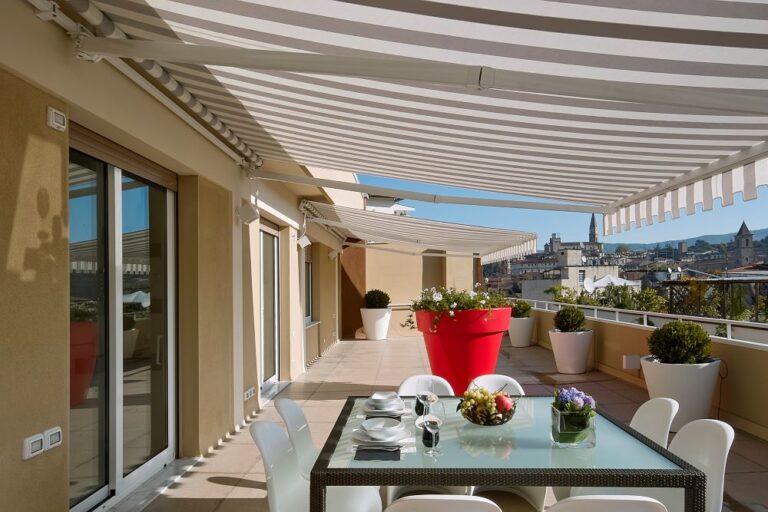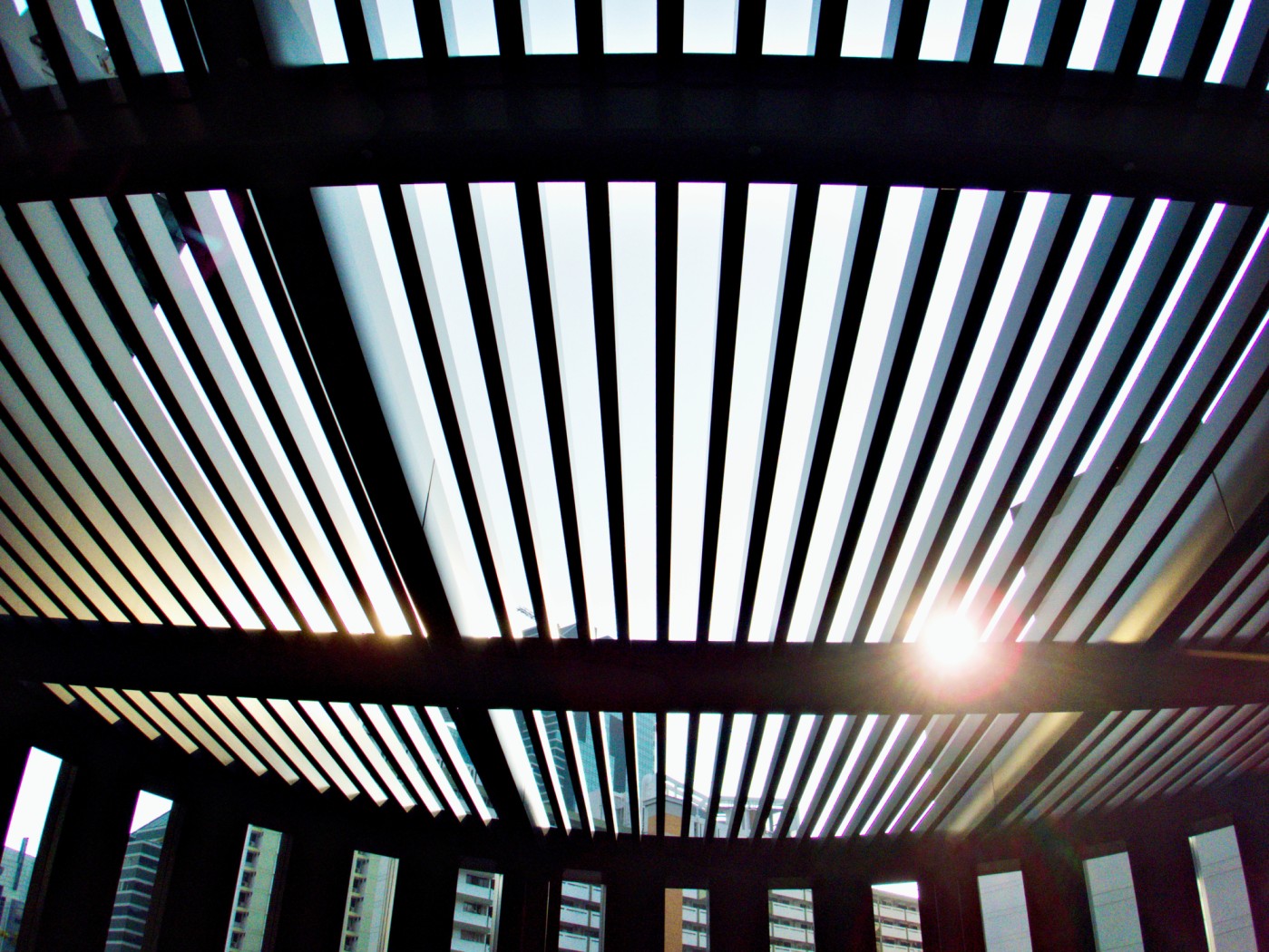
A timber pergola in Singapore does not fail all at once. It fails in stages. By year two the stain has gone chalky. By year four the joints have swelled, dried and split. By year six, something has found the end grain. Choosing an aluminium pergola here is not a style preference, it is a structural response to 85% humidity, a UV index that regularly hits 11, and subterranean termites that are endemic across the island.
At Alpha Shading, we have spent over a decade watching which frames survive this climate and which quietly surrender to it and which quietly surrender to it. Nearly every aluminium pergola we install today replaces something that did not last.
The Three Frame Materials, and How Each One Fails Here
Timber
Daily rain followed by full sun puts timber through a moisture cycle every single day. It swells, it dries, it shrinks. That movement loosens joints, opens the end grain, and lets water sit at the post base where fungal rot begins. Termites do the rest. Timber demands re-staining or re-oiling every 12 to 18 months, and that recurring cost is the line almost no buyer prices in at the quotation stage.
Steel
Strong, capable of long spans, and heavy. The problem is that permanent humidity and coastal salt air attack any breach in the coating. One drill hole, one ladder scratch, and rust creeps under the paint film where you cannot see it. Weight also matters on a balcony or roof terrace with a structural load limit.
Aluminium
Aluminium forms a self-passivating oxide layer, so it does not rust. It weighs roughly one third of steel at comparable structural performance in an extruded section, and termites have no interest in it. Two honest trade-offs: it is softer than steel and will dent under a heavy impact, and it expands and contracts more with heat, which is why joint detailing on a long span is not optional.
| Material | Rot | Termites | Rust | Maintenance cycle | Realistic life in SG |
| Timber | High | High | None | Every 12 to 18 months | 7 to 12 years |
| Steel | None | None | High | Repaint every 3 to 5 years | 10 to 15 years |
| Aluminium | None | None | None | Wash down only | 20+ years |
Our pergola range is built entirely in aluminium for exactly these reasons.
Not All Pergola Metal Is the Same
This is where most quotes go quiet, and where you should push hardest.
Alloy grade
Architectural extrusions are typically 6063-T5 or 6063-T6. The temper designation is not marketing language, it describes the heat treatment and therefore the stiffness of the section. A T6 profile carries more load before it deflects. If a supplier answers a question about pergola metal with a trade name rather than an alloy grade, you have learned something.
Wall thickness
A 1.2mm extrusion and a 2.0mm extrusion look identical in a photograph and behave nothing alike across a 4-metre span. Thickness is what resists deflection and what stops a beam from bowing under its own weight over time.
Extruded, not roll-formed
Extrusion produces the internal channels a modern system depends on: drainage voids, motor housings, cable routes. You cannot retrofit those into a hollow box section. Ask any supplier for the alloy grade and the wall thickness in millimetres. A specialist will answer in seconds. Our Compact Pergosystem is engineered around exactly that.
Powder Coating Is the Real Durability Layer
The aluminium underneath will not rust. The coating is what determines whether it still looks like a premium structure in year ten.
- Marine-grade specification matters on an island. Chloride exposure is real, particularly for properties within a few kilometres of the coast.
- Coating thickness is measured in microns. Architectural-grade is meaningfully thicker than decorative-grade, and the difference is invisible on day one.
- Colour is thermal. A dark powder coat absorbs more solar heat, which affects comfort under a low-clearance structure and increases thermal expansion across a long beam.
What an Aluminium Frame Lets You Build That Timber Cannot
Motorised louvre systems
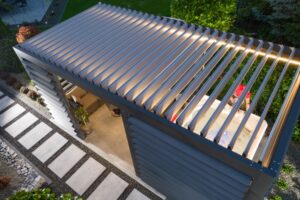
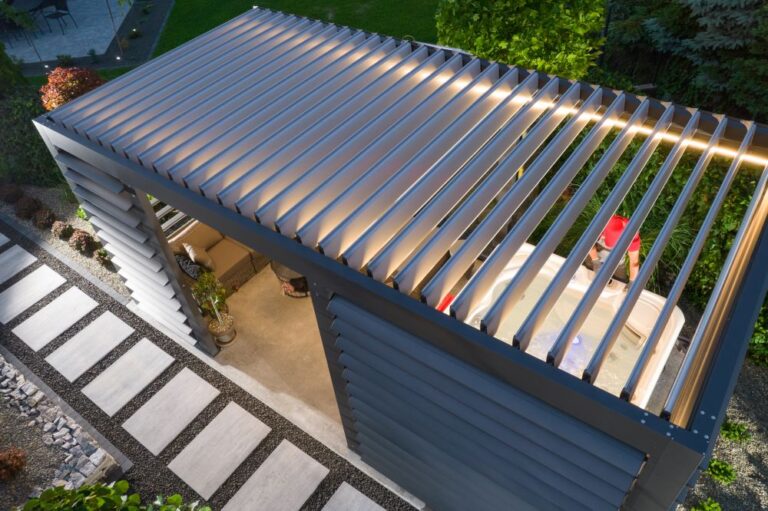
A bioclimatic louvre wall system or roof keeps dozens of moving blades aligned across years of daily thermal cycling. Timber moves; the blades bind and jam. Aluminium holds tolerance, which is why every serious bioclimatic louvre wall system in the world sits on an aluminium pergola frame.
Integrated drainage
Singapore receives well over 2,000mm of rain a year. Hollow extruded posts carry water from the roof gutters down through the structure and out at ground level, with nothing visible. A timber post simply cannot do this.
Concealed motors, wiring and lighting
Internal channels take the motor cabling, LED strips and rain sensors. Nothing is surface-mounted, nothing is exposed to weather.
Side infill
The frame becomes the anchor for glass or zip track blinds, which turns an open pergola into a genuinely usable room. Fabric selection then becomes its own decision, covered in our guide to choosing PVC fabric.
The 10-Year Cost Nobody Puts in the Quote
| Cost line | Timber | Aluminium |
| Upfront | Lower | Higher |
| Re-staining or oiling | Every 12 to 18 months | None |
| Termite treatment | Periodic | None |
| Member replacement | Likely by year 7 | Rare |
| Service life | 7 to 12 years | 20+ years |
An aluminium pergola costs more on day one and less by year six. If you are still weighing formats entirely, our awning versus pergola comparison is the right starting point.
Aluminium Pergola FAQ
Does an aluminium pergola rust in Singapore?
No. Aluminium forms a protective oxide layer and does not rust. The powder coating protects the finish, not the metal.
How long does an aluminium pergola last here?
Twenty years or more with a marine-grade coating and periodic washing.
Is aluminium hotter than timber under the sun?
The metal surface warms faster, but on a roof structure the shade cast, blade angle and clearance height determine comfort, not the frame material.
Do I need URA or MCST approval?
Landed homes follow URA guidelines. Condo units require MCST approval. Check before you design, not after.
Can I add zip blinds or glass later?
Yes, if the frame was specified for it. Tell your installer at design stage so the tracks and fixing points are built in.
Is it noisy in heavy rain?
A bare aluminium sheet drums. A properly engineered system with insulated blades and integrated gutters does not.
Aluminium or aluminum?
Same metal, different spellings. British spelling is standard in Singapore.
Stand Under an Aluminium Pergola Before You Buy One
Extrusion quality, coating depth and blade alignment are things you assess with your hands, not from a render. Run a finger along a joint. Listen to a louvre close. Every aluminium pergola in our project gallery started as someone standing in our Ubi Avenue showroom doing exactly that. When you are ready, arrange a site visit and we will bring the profiles to you.